
CPL / City Photography League
From Mysterious Boxing to the Leader’s Discipline
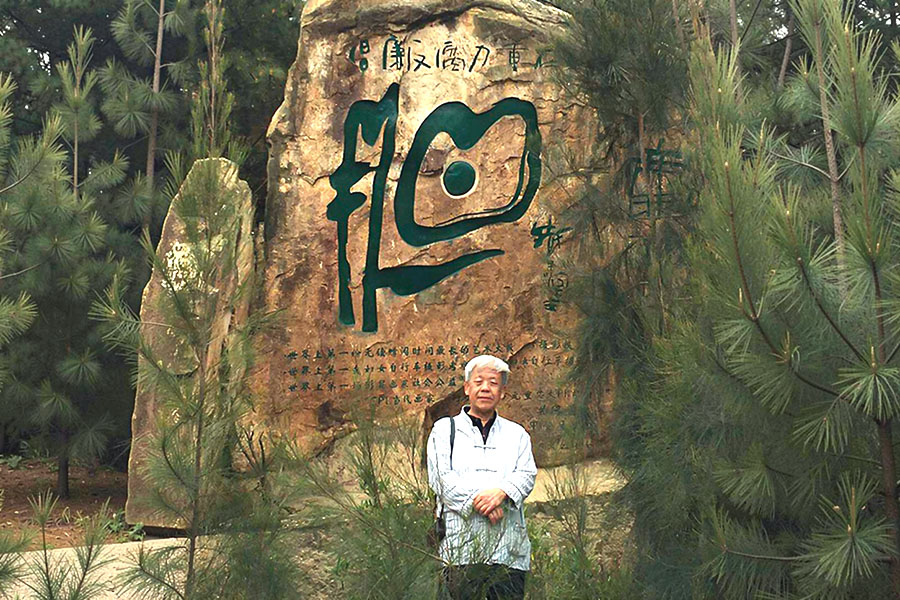
Long Xuming,Chair, City Photography League (CPL)
I dare to assert that, to this day, there has probably not been a single painter on this planet who has practiced what is called the “Leader’s Discipline,” and therefore they most likely would not practice “Mysterious Boxing” either.
This has been my lifelong coursework since the last century, entirely self-taught.
Before 1985, I participated in almost every professional exhibition in Sichuan Province and Chengdu City—oil painting, traditional Chinese painting, gouache, watercolor, printmaking, New Year prints, propaganda art, comic art, and more. The purpose was singular: to test my foundational skills across different schools and disciplines. I call that phase “taking it in.”
After 1985, I stopped participating in exhibitions and ceased applying for any form of certification, turning instead to practicing my own “Mysterious Boxing”—simultaneously engaging in five forms of visual, two-dimensional art: fine art, calligraphy, seal carving, photography, and literature. At the time, this approach ran counter to prevailing norms and was effectively an “underground practice.” Yet it was precisely this path that later gave rise to “One Painting, One Method,” my self-created calligraphic style “Panda Script,” a cross-disciplinary creative system, and the long-term practice of “Real-Name Landscape.”
In 1996, I published Neither Donkey Nor Horse Collection in Hong Kong, an integrated compilation of the Eastern “Five Arts” by a single individual. Since then, “Mysterious Boxing” has become how others describe my creative state. I know clearly, however, that this only pertains to the level of technique.
The true core lies in the “Leader’s Discipline.”
One Painting, One Method: Content Determines Form
I have always believed that art has no boundaries and should not be confined by categories.
The core of “One Painting, One Method” is this: content determines form, and form determines technique.
Every act of creation requires a fresh consideration of what to paint and how to paint it, rather than repeating a path that has already proven successful. This is why, even today, I have never produced two works with identical content, form, and technique.
Real-Name Landscape: The Historical Responsibility of Contemporary Artists
“Real-Name Landscape” is not a negation of tradition, but a response to changing historical conditions.
In an era where “there are airplanes in the sky, automobiles on the ground, and cameras in our hands,” artists finally possess the conditions necessary to depict real scenes using focal perspective.
Real-Name Landscape is not a simple act of copying photographs; it is a comprehensive method grounded in on-site experience, long-term sketching practice, and high-level photographic documentation.
It is a supplement to the two-thousand-year history of Chinese landscape painting’s difficulty in achieving “real naming,” and it represents the historical responsibility that contemporary artists should bear.
The Leader’s Discipline: Long-Term Action Beyond Art
If “Mysterious Boxing” and “One Painting, One Method” belong to the realm of artistic technique, then the “Leader’s Discipline” belongs to artistic strategy.
For decades, I have continuously organized and advanced public cultural actions, including but not limited to:
- Establishing the world’s first women’s bicycle photography expedition team
- Founding the longest-running freely distributed photography newspaper
- Initiating a six-year global public-interest competition for artists
- Creating actions and public archival systems for photographic cultural heritage
- Promoting the public-welfare vision and practice of the “Eastern Five Arts Harbor”
These actions are not driven by personal gain, but are an attempt to demonstrate that:
An artist’s social responsibility must be fulfilled through long-term, verifiable public action.
Conclusion
From Mysterious Boxing to the Leader’s Discipline, this is not an easy path.
Yet it is precisely because it is difficult that it possesses irreplaceable value.
True creation is never repetition;
and true art has never existed solely within the image itself.