
CPL / City Photography League
From “Shijing Landscape” to “Real-Name Landscape”
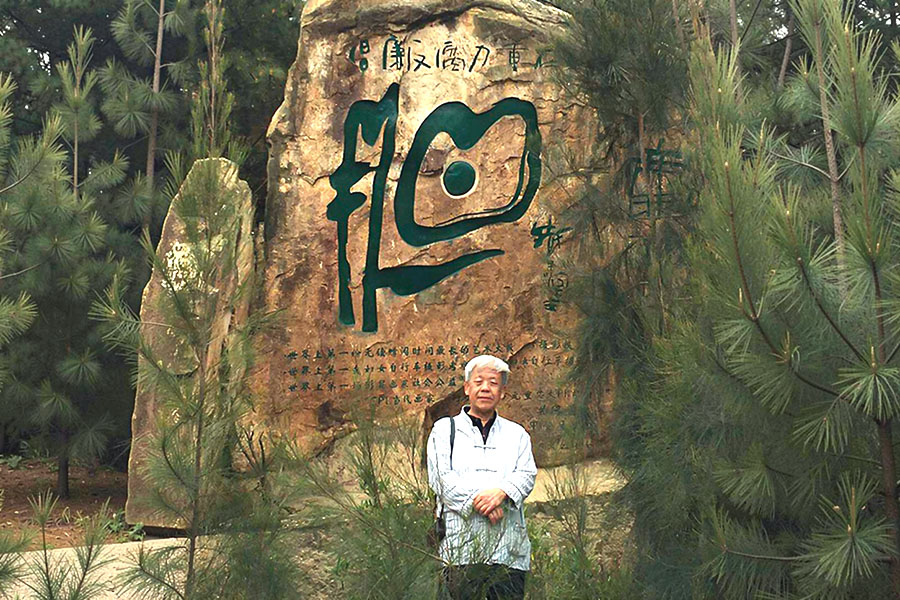
From “Shijing Landscape” to “Real-Name Landscape”
Ten Notes on Real-Name Landscape
Long Xuming,Chair, City Photography League (CPL)
Preface
In the long history of Chinese landscape painting, “shijing landscape” (painting from real scenes) has consistently pointed toward recognizability: mountains, rivers, landmarks, and built environments that can be identified and referenced. Yet, before the emergence of photography, this pursuit was often constrained by the limits of memory, distance, and the inevitable divergence between lived reality and brush-and-ink reconstruction.
“Real-Name Landscape” is advanced as a contemporary method under new conditions of record and mobility—when air travel, ground transportation, and photographic tools have become widely accessible. It argues for a discipline in which observation, lived perception, visual verification, on-site sketching, and photographic reference are combined so that a painted image can be compared with a real place and its name.
1. Historical Context: Shijing Landscape and Its Constraints
“Shijing landscape” is described as an important lineage within traditional landscape painting—one that emphasizes painting from life and pursuing a degree of recognizability. Its trajectory is commonly summarized as taking shape in early periods, maturing through the Tang and Song, and diversifying further through the Yuan, Ming, and Qing.
At the same time, the absence of photographic recording before modernity meant that “real scenes” could remain partially indeterminate. In that sense, “Real-Name Landscape” is positioned not as a rupture, but as a continuation and elevation of a long-standing aspiration—supported by tools and conditions that were previously unavailable.
2. A Scholarly Coordinate: “Sketching from Nature” and the Eastern Realist Line
A key scholarly coordinate is placed in 1979, when a lecture series (referenced as the Norton Lectures at Harvard University) highlighted the historical significance of Zhang Hong’s shijing practice and the principle of “sketching from nature.” Within this framing, shijing is not treated as peripheral to the Chinese tradition, but as an internal driver of its historical development.
This coordinate is invoked to emphasize that realism and site-specific reference are not foreign to Chinese landscape painting; rather, they have long existed as a persistent, though variably expressed, methodological thread.
3. The Contemporary Proposition: Photography as an Enabling Condition
The text explicitly argues that without the emergence of photography, “Real-Name Landscape” could not be established in its contemporary sense. It associates this proposition with the year 2012 and attributes its feasibility to modern mobility and image tools—air travel, automobiles, and the camera.
Within this framework, “Real-Name Landscape” is articulated as a composite method: observation, reflection, visual verification, sketching, and photographing are treated as an integrated set of practices aimed at producing an image that can be tested—by comparison—against a specific real-world scene.
4. Public Referencing and Institutional Visibility
A public reference point is cited in 2015, when an exhibition of historical shijing landscapes (“Only the Homeland Never Tires the Eye”) was presented as a comparative anchor. This is used to draw a clear distinction: historical “shijing” is not yet contemporary “real-name”—because the latter foregrounds verifiability and technical conditions of reference in a more explicit and systematic way.
The text then marks a completion point for the “Ten Notes on Real-Name Landscape,” dated 2015-10-07, and frames the public proposition as being advanced “in the name of photography.”
5. A Systematic Writing Program: 2010–2015
The “Ten Notes” are presented not as a single essay but as a sustained writing program, with a defined period from 2010-09-09 to 2015-10-07—approximately six years. This is positioned as a structured effort to articulate a modern, verifiable pathway within the xuan-paper and ink tradition, responding to historical limitations with contemporary conditions.
Milestones
- 1979 (Mar–Apr): A lecture series is cited as highlighting the value of shijing practice and “sketching from nature” as a methodological coordinate.
- 2012: “Real-Name Landscape” is presented as emerging under modern mobility and photographic reference.
- 2015 (Jul–Aug): A shijing exhibition is referenced as a public comparative anchor, clarifying the distinction between historical shijing and contemporary real-name.
- 2015-10-07: The “Ten Notes on Real-Name Landscape” is marked as completed and publicly advanced “in the name of photography.”
- 2010-09-09 to 2015-10-07: The overall writing period is presented as a six-year systematic program.
Facts & Figures
- Core text: “Real-Name Landscape and Shijing Landscape: The Historical Value of Ten Notes on Real-Name Landscape.”
- Writing period: 2010-09-09 to 2015-10-07 (approximately six years).
- Completion date: 2015-10-07.
- Method keywords: observation / reflection / visual verification / sketching / photographing (combined as an integrated practice).
- Key public reference: the 2015 shijing exhibition presented as a comparative anchor.